How to make
The viburnum berries are rinsed well under cool water, then picked from the stems. Any soft or dark berries are removed. For a smoother, brighter viburnum jelly, the fruit is placed in a saucepan with the water and brought to a gentle boil.
The berries are simmered for 10-12 minutes, until they soften and release their deep red juice. They are lightly mashed with a spoon during cooking, then the mixture is strained through a fine sieve or cheesecloth. The pulp is pressed gently, just enough to extract the juice without making the jelly cloudy. There should be about 600 ml / 20 fl oz of liquid; if needed, a little water is added to reach that amount.
The strained viburnum juice is returned to a clean saucepan. The agar-agar is whisked into the cool or barely warm liquid and left for 5 minutes so it can hydrate properly. The sugar and lemon juice are then added, and the mixture is stirred until the sugar begins to dissolve.
The saucepan is set over medium heat. The jelly base is brought to a full boil while stirring often, then cooked for 2 minutes. This short boiling time is important because agar-agar needs heat to activate and create a clean, naturally firm set.
The hot viburnum jelly is poured into clean small jars, cups, or serving bowls. It is left at room temperature for about 30 minutes, then chilled for at least 2 hours, until glossy and set. Agar-agar firms up faster than gelatin, so the jelly should hold its shape on a spoon while still feeling tender.
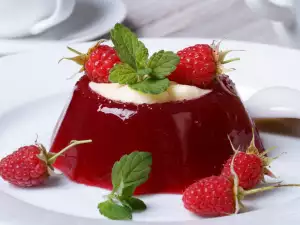
The finished jelly is served cold, with a few fresh viburnum berries on top if desired. It keeps well in the refrigerator for up to 5 days in covered jars. For a softer texture, the agar can be reduced slightly; for a firmer sliceable jelly, a little more agar may be used.
For more light fruit desserts, try the delicate fresh apricot jelly for a light sweet treat and the refreshing watermelon jelly for coolness in one bite.