How to make
The flour and salt are placed in a wide mixing bowl and stirred together so the salt is evenly distributed. The warm water is added gradually, not all at once, while the flour is mixed with the fingers or a spoon. This helps the dough come together without turning sticky too quickly.
Once the mixture looks shaggy, the oil or melted ghee is added and the dough is kneaded for 8-10 minutes. It should become soft, smooth, and pliable. If it feels dry or cracks at the edges, a teaspoon of warm water is worked in at a time. If it is too sticky, a little flour is added, but only enough to make it manageable.
The dough is shaped into a ball, covered with a clean towel, and left to rest for 20 minutes. This resting time is important for fresh stovetop roti chapati because it relaxes the gluten and makes the flatbreads easier to roll thin without tearing.
After resting, the dough is divided into 8 equal pieces. Each piece is rolled into a smooth ball, lightly dusted with flour, and flattened with the palm. One ball at a time is rolled into a thin round, about 18-20 cm / 7-8 inches wide. The work surface and rolling pin are dusted lightly, but excess flour is brushed off before cooking so it does not burn in the pan.
A heavy skillet, cast-iron pan, or tawa is heated over medium-high heat for 3-4 minutes until hot. One chapati is placed on the dry pan and cooked for about 45-60 seconds, until small bubbles appear and the underside has light brown spots. It is flipped and cooked for another 45-60 seconds.
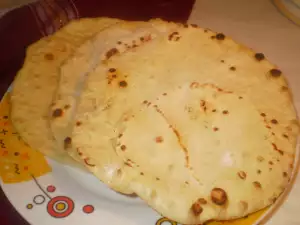
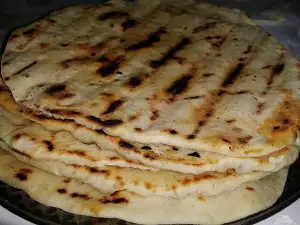
The chapati is flipped once more and gently pressed with a clean kitchen towel or spatula for 20-30 seconds. This encourages puffing and creates the soft layered texture seen in fresh roti. The finished flatbread should have golden-brown spots, a flexible texture, and no raw doughy patches.
Each cooked roti is transferred to a plate and covered with a clean towel to keep it soft. If desired, the warm flatbreads are brushed lightly with ghee or oil. They are served fresh with cilantro on top, alongside curries, lentils, grilled vegetables, yogurt dips, or stews.
Leftover roti chapati can be cooled completely, wrapped well, and stored at room temperature for up to 1 day or refrigerated for up to 3 days. To reheat, each flatbread is warmed in a dry skillet for 20-30 seconds per side, then covered briefly so it softens again.
For more homemade bread ideas, try the fluffy soft pull-apart dinner rolls and the aromatic easy Indian naan flatbread with your next meal.