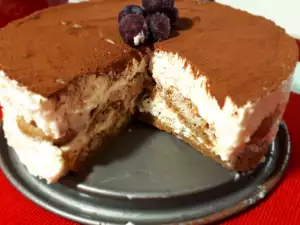
How to make
Start by preparing the cake layers. Combine the butter, sugar, and honey in a bowl placed over a double boiler.
While the mixture is melting, beat the eggs with the salt and baking soda and let them sit briefly. Add the egg mixture to the warm honey mixture while whisking continuously. Continue beating the mixture over the heat for about 10 minutes.
Remove the bowl from the heat and gradually add the flour while stirring until a soft dough forms. Wrap the dough in lightly oiled plastic wrap, shape it into a log, and refrigerate for at least 1 hour until firm.
Meanwhile draw circles on sheets of parchment paper where the cake layers will be rolled. The circles should be slightly larger than the diameter of your cake pan. Depending on the size of the cake pan you may make 6, 8, or even 10 layers.
Cut the chilled dough into the same number of pieces and shape them into balls. Lightly dust with flour and roll out each piece to match the drawn circles. For easier rolling, you can cover the dough with plastic wrap while rolling.
The layers should be extremely thin, about 1 mm thick. Pierce them with a fork and bake at 200°C (390°F).
The layers bake very quickly, so prepare at least a few ahead of time. As soon as each layer is baked, place the base of your cake pan over it and trim it into a perfect circle. Reserve the trimmed edges for later.
The baked layers can be wrapped in plastic wrap and stored in the refrigerator for up to a week.
To prepare the cream, beat the mascarpone with the condensed milk. In another bowl beat the butter with the powdered sugar until fluffy. Combine both mixtures and add the vanilla.
Divide the cream according to the number of cake layers, reserving one portion to frost the outside of the Medovik cake.
Assemble the cake by layering sponge and cream alternately until finished, ending with cream on top.
Place the leftover baked scraps in a bag and crush them into crumbs using a rolling pin.
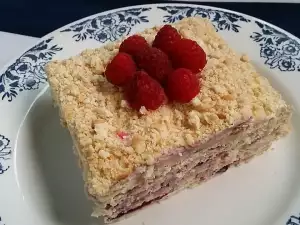
Refrigerate the cake so it can set. Remove the cake ring, spread the remaining cream around the sides, and coat the cake with the crumbs from the leftover layers.
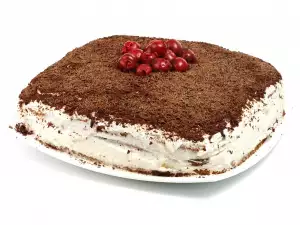
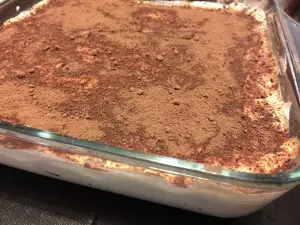
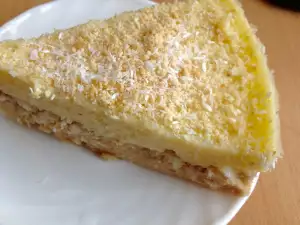
Return the cake to the refrigerator. After a few hours the Medovik honey cake is ready to serve.
Two other classic cakes we recommend trying are the beloved Napoleon cake and the famous Russian Pavlova cake.